graduation meditation

We knew this time was coming. Yet, it doesn’t seem real. My “2002 baby” graduated from elementary school this morning.

We went to a local restaurant to celebrate and that carried over to a friend’s house. It’s times like these that remind us it doesn’t have to be a lavish spread to celebrate a milestone in life. We had some local restaurant food, and ended up at our neighbors’ house, where the kids played, ate the pizzas we ordered, and caught fireflies when it got dark. Simple pleasures.

Our school outgrew the building several years ago for graduation. The graduation was on the same grounds where my fifth-grader went to pre-school. A beautiful park setting. It feels like our journey came full circle today.

Pizza, chips, swimming in a pool, and some sangria, seemed to be the most perfect buffet life could offer us all on this graduation day.

Congratulations to all the June graduates everywhere.

spice is nice, but that is not

There’s a rule in our house. When trying new foods, if the guys don’t like something (and thankfully, that’s not often) they have to give a reason for not finding pleasure in the food. They’ve offered up everything from “It’s too spicy!” to “I can hear the crunching in my head!” These are not comments you’ll find in a New York Times restaurant review next week.

Can someone who spends hours writing about food have a food, or ingredient, he or she doesn’t like? Sure, and many do.  Monica Bhide writes about spices, food, and family, at her blog, “A Life of Spice.” Her passion is, for the food from her country, of India. She is the author of the book called “Modern Spice” (Simon and Schuster 2009).

When the question was posed to food writer, Monica Bhide, about a food or ingredient she doesn’t like, her response was one word — celery. The vegetable that makes tomato juice and vodka a Bloody Mary. The vegetable. that is constantly being used as a boat for anything spreadable, is the item she double-bags, and hides, in the back of the refrigerator.

Why does she have any celery in the house.at all? It turns out, she’s the only one in her house not sharing any love for celery. That happens in families and we have to learn to put up with the differences.

In her defense, Bhide had never even seen a stalk of celery until she saw a friend preparing it in her kitchen in the United States. The thing that turned her off the most was the scent it gave off. She still doesn’t like the smell of it. That’s the reason for the double-bag-hide-in-the-back-of-the-fridge method she uses to store it in her kitchen.

In our conversation, she shared that she was motivated to write an essay about her dislike of all things celery. You can read about it here: http://www.monicabhide.com/2012/04/once-upon-a-story-celery-for-the-love-of-god-why.html 

A woman, who can crank up the heat with spices, can be rendered defenseless to this root vegetable.

The guys happen to love celery soup. I guess I know who does not want the guys’ celery soup recipe.  Monica, just don’t look at any of the celery photos here today.

You can see the recipe this week. Stay tuned. Tomorrow is graduation day.

Archie and the gang

We were on the checkout line, in a supermarket several years ago, in a different neighborhood. When the guys were little, and they had to be dragged to do food shopping in the summer months, we would head to this supermarket.

The reason they didn’t complain about going there? It wasn’t our neighborhood market. We didn’t know anyone in the store and no one knew us. We could shop and not stop for any conversation.

Fair enough. We were on the checkout line one steamy afternoon in the icy, air-conditioned store. My older guy spotted an Archie comic book on the magazine rack. He was five years old.

“What’s that?” he asked.

He reached up and grabbed a copy and started to read through it.

Little did we know this would spark a years-long obsession that continues today. He gets new copies of Archie comics every week as they come out. Little brother has become a fan too.

From the pages of Archie comics, we began our tradition. Malted milkshakes after dinner when school is out for summer vacation. We sit outside and have the malted milkshakes by the pool. Sometimes, we do a full Archie and the Gang dinner. That means Jughead cheese burgers. 

They know, when the blender is whizzing, the shakes are soon to follow. We have tall glasses that look like fountain shop glasses. We measure out organic, whole milk in the glasses. Keep in mind that once the ice cream, and other ingredients are added, it will take up more room in the glass.

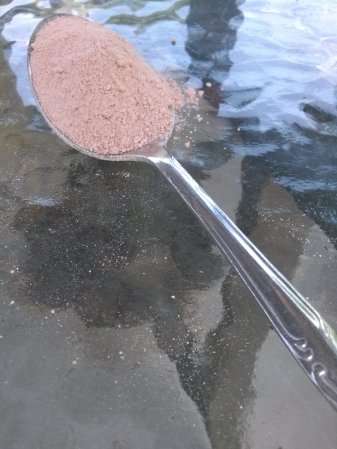
After you’ve measured your amount of milk in the glasses, pour into the blender. Add 2 scoops of chocolate ice cream. Add a half cup of malted milk powder. You can find it at the market with the hot chocolate mixes and cocoa powders. Add a half cup of cocoa powder. The guys like the flavor of a hint of vanilla flavor in their chocolate malted milkshakes. 

We split a vanilla bean and scrape out the inside at the beginning of the season. We place the pod in a jar of sugar and infuse it with the vanilla flavor. In a few weeks, it will be vanilla sugar, and we’ll use the sugar in our milkshakes. Chill the glasses you’ll use for the milkshakes. Pour the milkshake, from the blender, into chilled glasses and garnish with mint. Don’t forget straws. A cold and frothy treat on a summer night.

School is over this week, and first grade comes to an end, for the little guy. Big brother closes out his career in elementary school. When did that happen?

It’s the final week of the blogathon too! See you tomorrow.

a better bolognese

The guys know when it’s time to make a batch of Bolognese. This Bolognese doesn’t include milk as in some recipes. Roasting some of the ingredients gives a deeper flavor to the sauce.
A Dutch oven is a perfect pot for this sauce as it takes layers of flavor to build. This pot can hold up to the heat.  This isn’t a complicated sauce. There’s an order, to add ingredients, to get the most out of them.

Start with chopped mushrooms. Adding the mushrooms first draws out the moisture. Place the mushrooms in a dry pot with no butter or oil.

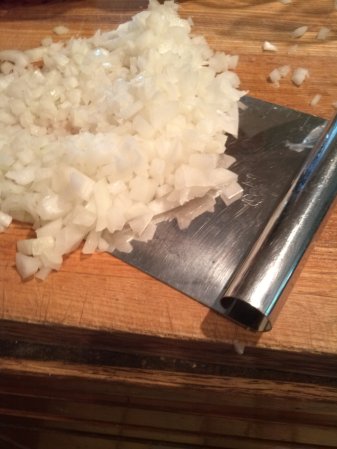
When they are done, add a finely chopped large onion. Working with a large onion can be tricky. Cut off the root end of the onion. Use your knife and slice off one of the rounded sides of the onion to give you a stable onion to continue to chop.

Here’s a tip when you are transferring lots of chopped items from your cutting board to a pot on the stove. Use your bench scraper that you would use with dough. If you don’t have one, even if you don’t bake, it’s worth investing in one for this purpose.
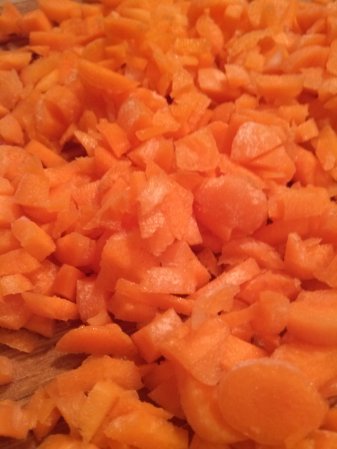
Next, finely chop about 12 baby carrots. They will add a little sweetness to play off the bolder flavors in the sauce. Add a little Kosher salt to the mix. Cook until softened. Some chopped garlic goes into the pot.
Add about a pound of chopped chuck or sirloin. Sprinkle the meat with a generous helping of onion powder, garlic powder, and paprika. The paprika will help brown the meat.

On the grill, you will follow the same process, for roasting 8 plum tomatoes and 2 red peppers, that we did a few posts ago.

Prepare the tomatoes and peppers with some olive oil, balsamic vinegar, and Kosher salt. The tomato juices will be helped by the balsamic vinegar to caramelize the natural sugars.

Back to the ingredients in the Dutch oven. When the meat is browned, add a can of crushed tomatoes. Simmer on a low flame. When the grilled tomatoes and red peppers have cooled, cut into small pieces. Add to the pot. Toss in some chopped rosemary leaves.

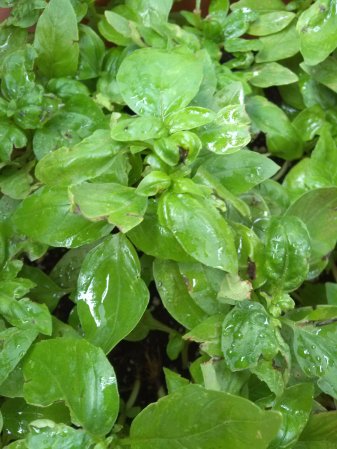
Let the pot simmer for about 30 minutes. In the last few minutes of cooking time, you can add some chopped, fresh oregano and basil.

Stir in a large handful of Pecorino Romano in the sauce too. Serve with spaghetti or linguine.

We’re in the final stretch of blogathon 2013! Check back tomorrow.

master the macerated berries

The berry season is in full swing. The guys like their berries many ways. A dollop of fresh, whipped cream here. A splash of  just-squeezed orange juice there. We scored some chocolate mint for the season.
For some weird reason, the last two growing seasons, the chocolate mint in the garden came back, but without the unique chocolate flavor. This year we’re  putting it in a pot and taking it inside when the air starts to get a chill.

Let’s not think about that since we’ll probably be in the pool after school today.

Have you ever tried your berries soaked in something tart like balsamic vinegar? Macerating fruit means to soak it in a liquid until it is soft. Another method is to sprinkle the fruit with sugar to help draw out the natural juices of the fruit. Who says you can’t do both methods? Bring out every flavor you can for a refreshing dessert.

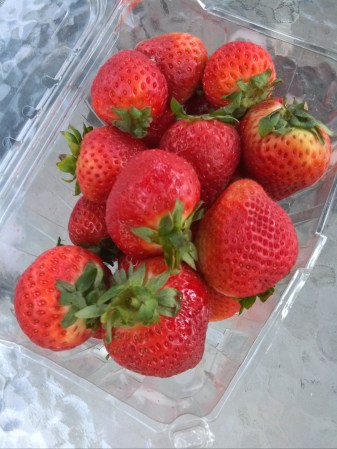
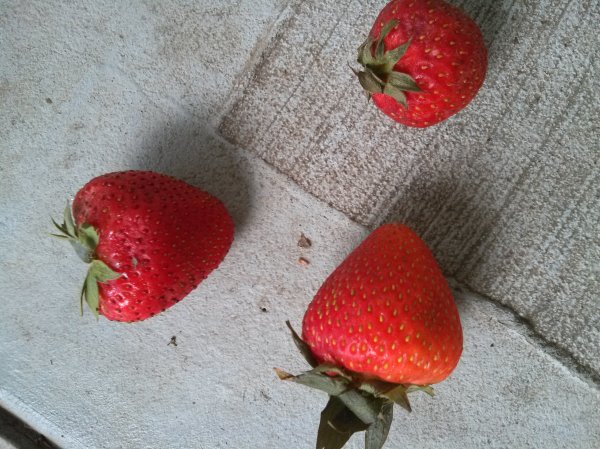
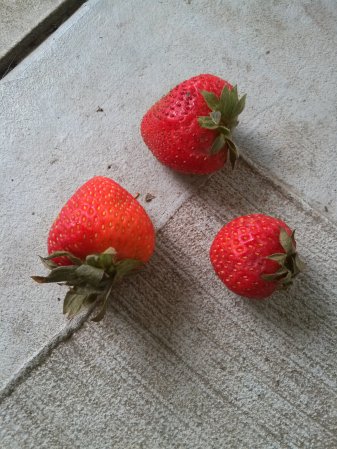
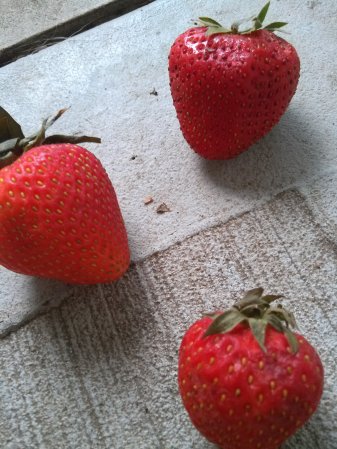
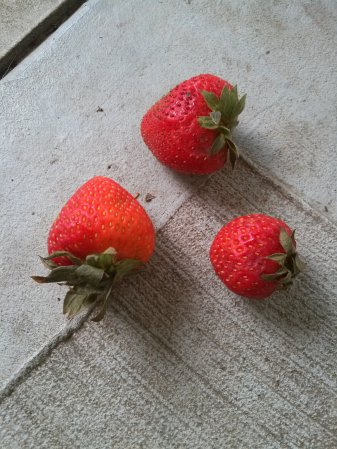
These are the first of our strawberries.

For this recipe, remove the stems of your strawberries. Slice them lengthwise. Place them in a shallow bowl and dish. Sprinkle with sugar. In our kitchen, we like to use the raw sugar. It has a distinct flavor and texture.

http://www.marthastewart.com/340218/macerated-strawberries

The granules are an amber color and the crystals are larger than granulated sugar. When used on the surface of something like strawberries, it adds a nice crunch to the bite.

Leave the strawberries for about 30 minutes. You will notice some of the juices of the strawberries will start to pool in the bottom of the dish.

Now, add your blueberries. Splash some balsamic vinegar over the berries. You can put a little more sugar to balance the  acidity of the balsamic vinegar. Allow the berries to rest in the mixture for about an hour.

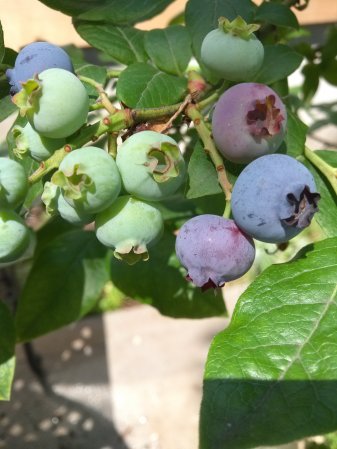
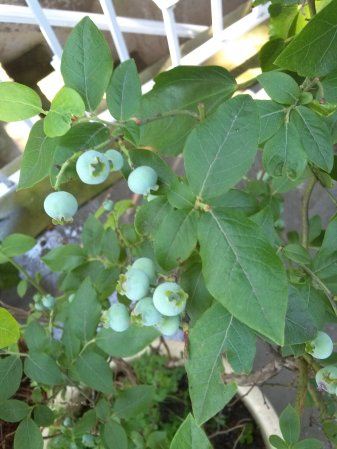
Our blueberries are looking good.

The berries soak up the tartness of the balsamic vinegar. This mixes with the sweet juices from the berries and balances the flavors. The vinegar also works to soften the texture of the berries. Serve in bowls and add whatever toppings you like. Cream, that has been whipped, works with some mint.

We also like this berry dish with the richness of a marscapone cheese. We  play a version of guess-the-mint-in-the-macerated-berries game. Is it the citrus mint with the orange flavor? Do you taste a hint of chocolate from the chocolate mint?

On a warm night, last summer, the slow, evening breeze carried the scent of the chocolate mint past us as we had dinner outside. It was like sitting in a bowl of  mint chocolate ice cream. Try and find some for your garden this summer.

Stay tuned!

ricotta revisited

There are some food products that are so easy to make. The kind of easy-to-make method that makes you wonder why you waited this long to do it yourself. Really.

If you’ve never made homemade ricotta cheese, today, just may be your turning point. The straight forward process involves heating milk, adding an acid, and allowing liquids to drain for about a half hour. Doesn’t that sound easy?  It’s the kind of revelation that will probably make you pass up the ricotta, in those little plastic cups, in the dairy section at the market.

Heat a half gallon of milk until it starts to simmer. Keep stirring the milk as it heats up. This will prevent any scorching in the bottom of the pan. Don’t trust yourself to determine a simmer? Use a food thermometer. When the heat is between about 165 and 180 degrees you have reached the correct stage. Now add 4 to 5 tablespoons of the     distilled vinegar. Stir in 1 teaspoon Kosher salt. Remove the pan from the heat.

The acid in the vinegar causes the milk solids to coagulate. This makes the small curds for the ricotta cheese.

Place cheesecloth over a bowl and pour the heated milk through the cheese cloth. Allow the curds to drain for 30 minutes. After the liquids drain, remove the cheese cloth from the bowl. Spoon into a bowl and chill in the refrigerator for about an hour.

We like to have ricotta cheese sometimes as a dessert with fresh fruit. If it’s a main ingredient, paired with something else, you want the single flavors to stand out. That’s why we like to make it ourselves. If you are making this for a dessert, you can swap out the vinegar, and use fresh lemon juice.

You can add honey or agavae nectar. When it’s a dessert, or any time the lemon flavor works, go ahead and use lemon juice as the coagulant.

Another reason to make your own ricotta is, once again, to control the ingredients. Check the labels at your market. See if you can identify the cartons that are from dairies near you.

Here’s another idea for your strawberries. Serve the berries with the lemony ricotta mentioned above. A nice, light fruit and cheese course to end a dinner outside on a warm night. Last year, on the 4th of July, we had strawberries and blueberries, with ricotta, for our red-white-and-blue dessert. Top with mint leaves.

Make this with the kids. Add some basil and use the ricotta in a lasagna. Is it already Friday tomorrow? We are at the 20 day mark for blogathon 2013!

not from concentrate

Thank goodness the guys got a computer for Christmas. If it weren’t for their computer, our run with the blogathon would have crashed and burned today. The computer, which occasionally frustrates, exactly at the times it needs to be the most cooperative, strikes again.

Where were we?

Strawberries. There are so many dessert options for strawberries. Their sweet taste pairs well with light, golden, pound cake. A fast dessert to pull together is strawberries and pound cake. Pick up some pound cake at the market. And of course a container of strawberries. Use the technique we used yesterday to keep your leftover berries fresh.

Squeeze some oranges for about 1/4 cup of juice. You can also used fresh squeezed orange juice that you have with breakfast. Pour the orange juice in a sauce pan. Gently simmer over a low flame. The juice will start to thicken and reduce.

This should take about 5-6 minutes. You’ll know when it’s done when it’s reduced by half the amount. Run a spoon through the liquid. It should leave a trail behind in the pan. This concentrates the citrus flavor, giving you a heightened orange flavor.

Allow to cool. Slice the pound cake into slices. Place on a plate, cut side down. Lightly brush or spoon the reduced orange juice evenly over the pound cake. Sprinkle with some granulated sugar. This gives the pound cake a little bit of a crunchy topping layered with the orange flavor. Slice strawberries and arrange on top.

When the guys were first eating strawberries, they liked the berries sliced, and placed on a plate vertically. We fanned them out to look like a strawberry mountain range. We called them strawberry mountains and the name has stuck.

To finish the presentation, for your dessert, grab some mint from the garden. See what your farmers’ market has to offer. There are different varieties of mint.  For this dessert, we like to use our orange mint to mirror the orange flavor in the juice reduction.

Try growing some mint. Pick out a variety and put it in a pot. Mint roots like to wander, so they have a tendency to choke neighboring plants. Some gardeners like the look of it in a border. You can bury the whole pot, mint and all, in the ground.

For a final touch, put some powered sugar in a strainer. Tap it over the pound cake and strawberries. A shower of powdered sugar makes anything look like the perfect dessert.

strawberry bowls forever

The very trait of organic berries we value is that there are no pesticides. Yet, that is the very reason you’re in such a race to use them. They’re highly perishable and meant to be consumed quickly.  What if you were tempted by that overflowing basket of June strawberries? Now, you’re overwhelmed with how fast they need to be consumed.

 What do you do if your CSA has a large box of strawberries coming your way? CSA stands for Community Supported Agriculture. If you’re not familiar with a CSA, you can read about and find one here:  http://www.localharvest.org/csa/

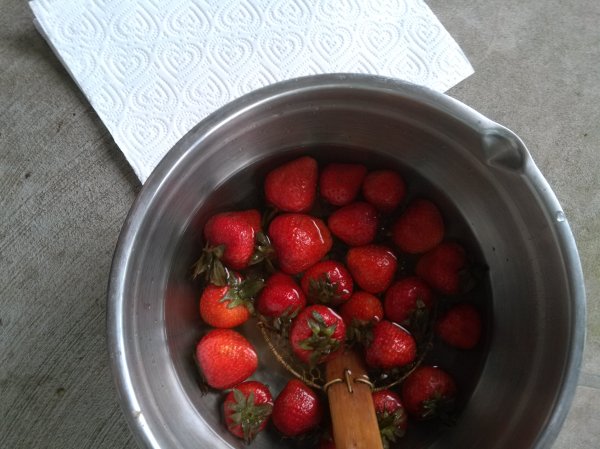
Slow down. However some fragrant berries have found their way to your kitchen — follow these simple steps. Here is a method for cleaning strawberries in a 3 to 1 solution. It will help extend the fresh cycle for your strawberries. 

We buy organic and we grow organic. We like knowing there are no pesticides. It’s how we know for sure what’s in the food on our dinner table. You want to enjoy the season’s berries without wondering, what, or how much, of something has been sprayed on your berries.

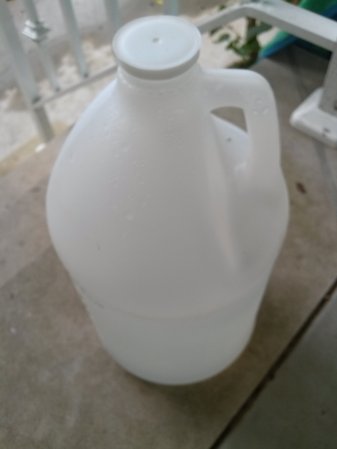
There are two items you might not think of together. White vinegar and berries. White vinegar can help you keep your berries fresh. The acidity in the vinegar gets to work  on the strawberries after being submerged in a solution of 3 parts water to 1 part vinegar.

Place strawberries in a bowl. Add the water and white vinegar. Let soak for 40-50 seconds. Remove with a slotted spoon, or a spider, as seen here. (That’s what the tool is called. Not the bug. I don’t spray chemicals on them either. Usually.)

Remove the berries and rest on a paper towel. Give them a spin in the salad spinner lined with paper towels. Place in a container, with paper towels, and the lid open slightly. Store in the refrigerator. This method will help you stretch the amount of time you have fresh berries available.

Most advice for the kitchen says you shouldn’t wash berries and store in the refrigerator. That would encourage mold. The recommendation is to wait until you are ready to use them.

This pre-wash method works because the vinegar kills any bacteria that leads to mold. Summer fruit is such a pleasure to have around. Summer berries are a little pricey. So, do what you can to get the most out of your purchase.

Tune in tomorrow for delicious ideas for berries!

what’s in store?

It’s a sunny day with puffy clouds in a blue sky. You walk through the farmers’ market. Baskets, bushels, and crates, are overflowing with produce. Doesn’t a sparkling day make everything look irresistible?

When you get home, the cloth bag is unloaded. (Click on this link to read about the importance of cleaning those cloth bags! ) http://blogs.phillymag.com/bewellphilly/2012/04/05/checkup-reusable-shopping-bags-swimming-germs/ 

 Here are some thoughts for storing your herbs. These tips are for herbs you get at the market. You may have taken too much from your own garden. Keep the herbs fresh for another meal. 

Farmers’ markets feature herbs in two different ways. They can be pre-cut and packaged. Harvested and trimmed at the roots. They can also be displayed in buckets of water with roots intact.You want to store the herbs in the refrigerator. By taking some time to prep the herbs, you can save time when making meals for the next week or so.

For herbs without roots, store in several sheets of paper towels. Briefly run the paper towels under running cold water. Lightly moisten the paper towels. You want to save rinsing the herbs for when you are ready to use them. Wrap the stems in the moist paper towels. Place the herbs in a plastic bag and store in the refrigerator. You can also wrap some plastic wrap around the bundle. It works just as well as a plastic bag. This will keep your herbs fresh for about two weeks.

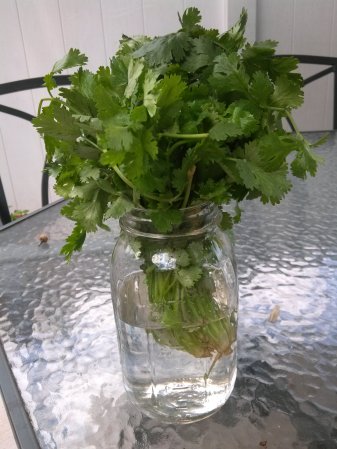
The herbs in the water buckets have the roots intact. In this instance, you want to store them, in a glass or jar, of water. You want to retain as much moisture for the herbs until you are ready to work with them. Again, save washing the herbs until they are ready to go into a dish to add flavor.

After placing the herbs in water, cover with a plastic bag or a large square of plastic wrap. You don’t have to secure the plastic bag in any way. Leave it to loosely cover the herbs. You can place the jar of herbs in the refrigerator and use for the next two weeks.

If you have a bunch of basil, with the roots or not, place in a jar of water. No plastic. Leave the jar out on the kitchen counter. The basil will wilt in cooler temperatures. It’s much happier sitting on the counter until you’re ready to use it.

More tomorrow!

the old plant and switch

“Plant a radish, get a radish, not a brussel sprout. That’s what I like vegetables. You know what they’re about.” That’s a line from “The Fantasticks.” It’s a charming little musical, that played off- Broadway, in New York City, for many years. The whole point of this number is two fathers compare raising children to planting vegetables. They think there are no surprises with either process.

In the play, one father has a son. The other, a daughter. Their philosophy? You raise a boy one way and a girl in another manner. You plant a vegetable and there are no variations. We all know that’s not necessarily true.

Children and plants surprise us all the time. My guys have surprised me along the way. That’s the wonder and joy of raising them.

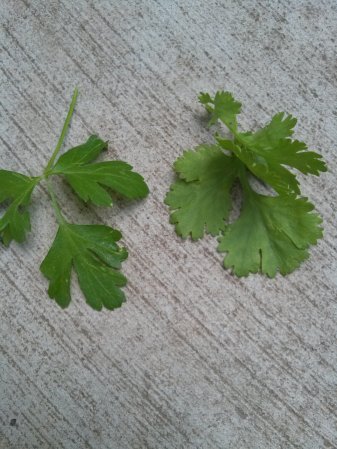
I’ve been in my garden books all weekend. You’ll notice the cilantro from yesterday’s post is in a jar. (Or did you?) Not from my garden. Not in my many pots.

Last summer I bought a little cilantro plant. When you buy cilantro at the market, it comes in fairly large bunches. When we’re working with cilantro, we only use a small amount at a time. We got a cilantro plant and used it all summer.

We’re not in a zone where cilantro can stay outside for the cold-weather season. We put it in a pot and brought it inside. We used it through the fall. Mid- winter it wasn’t looking so great. In order to put some energy back into the plant, we cut it all back. We had a 3-bean chili with the cilantro and hoped for the best.

In March, there was some new growth. We’re always happy when that happens.The plant that looked like it was finished — was making a comeback. Children and plants are resilient. Sometimes, more than we give them credit for.

Last week, the plant looked healthy. The first grade had taken a trip to see Skippy Jon Jones. There’s a group in the play that call themselves Los Chimichangas. That’s what we made for dinner. The chimichangas were sprinkled with our newly lush cilantro.

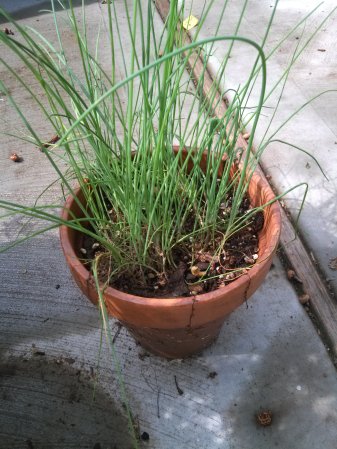
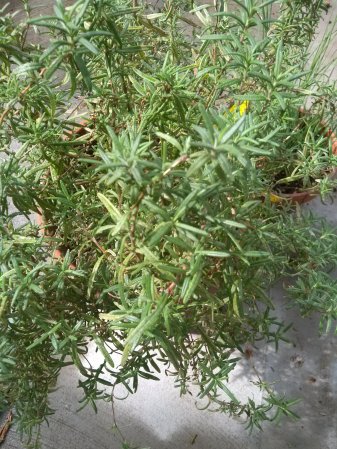
The guys didn’t like the flavor and started picking the garnish off the top. The herb was now the most potent flat leaf parsley. We don’t use parsley. It’s not an herb any of us really like. That’s why we don’t grow it. What happened?

We’re hoping to find an answer in our garden books.

See you tomorrow for week three of the blogathon!