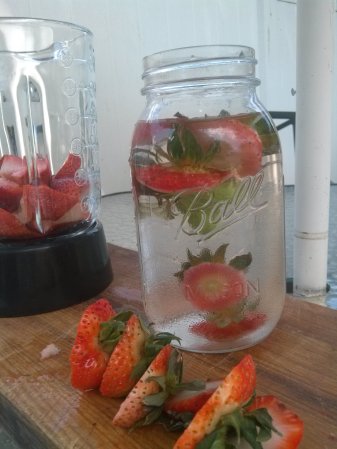
iced tea and lemonade ideas

The warm weather makes you want to enjoy a cool and refreshing drink. Lemonade, iced tea, and flavored waters are all summer drinks. Here are some ideas for the months ahead.

SUN TEA

These containers are available in stores now to make sun tea this summer.

You make a simple syrup and fill with water and tea bags. Don’t use just one kind of tea. Mix up the flavors to make a unique flavor all your own.

Set the container outside and the warmth of the sun brews the tea in a few hours. You can drop slices of orange or lemon to release their citrus taste to your sun tea as it brews.

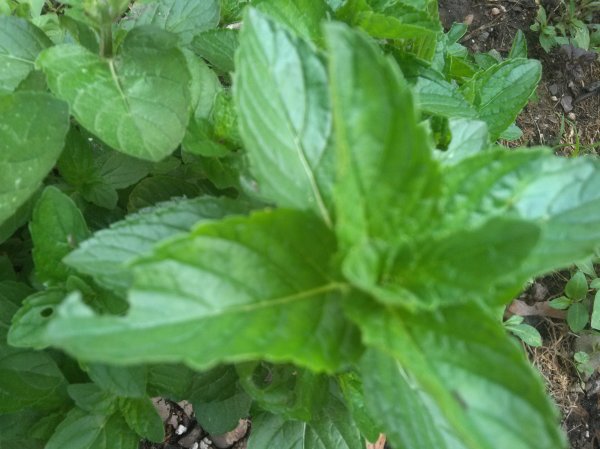
When the tea has brewed, transfer the container to the refrigerator for about an hour. Serve with slices of lemon and garnish with our reliable sprig of mint.
STRAWBERRY LEMONADE

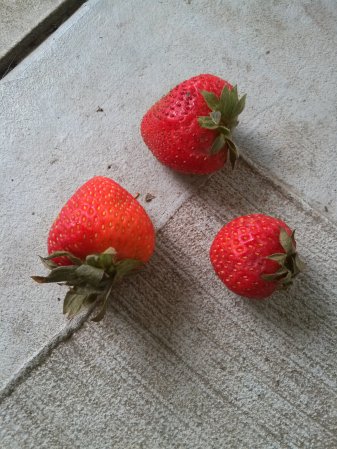
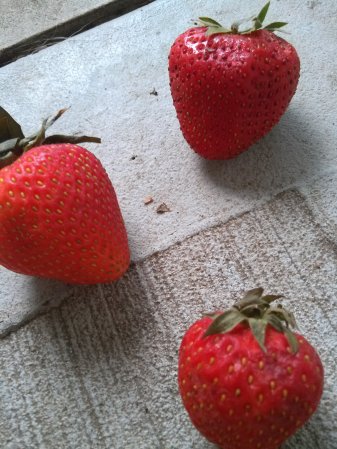
Nothing says summer in a glass like lemonade. Maybe somewhere in the middle of the season you want to shake up your drinks routine with a version of lemonade known as strawberry lemonade.

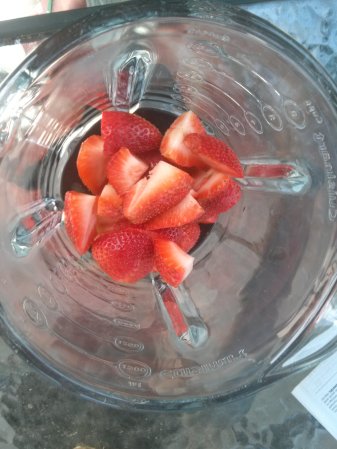
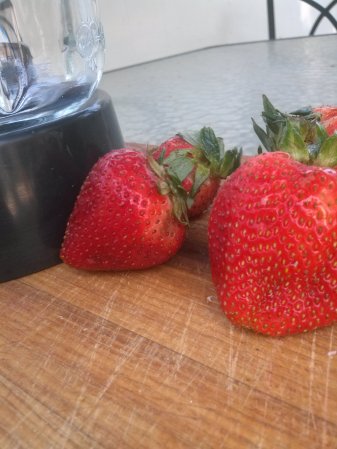
You can puree some strawberries in a blender and stir into your pitcher of lemonade. Have some fun and freeze slices of strawberry in an airtight plastic freezer bag.
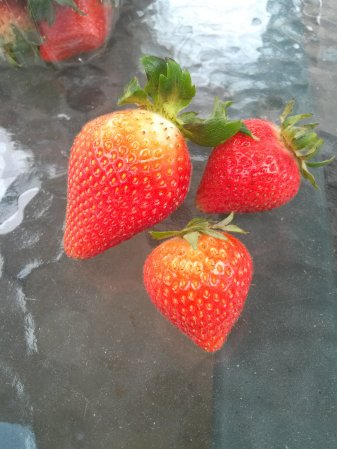
Drop the frozen strawberry slices in the glasses of strawberry lemonade instead of ice cubes to keep your drinks cool.

Do you need a recipe for lemonade? Here you go.

CLASSIC LEMONADE

1 cup cold water

1 cup fresh-squeezed lemon juice

1 cup granulated sugar

(To make it pink lemonade add a splash of cranberry juice.)
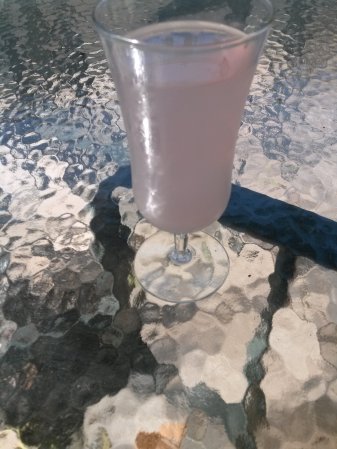
The key to a smooth-tasting lemonade is to make a simple syrup.
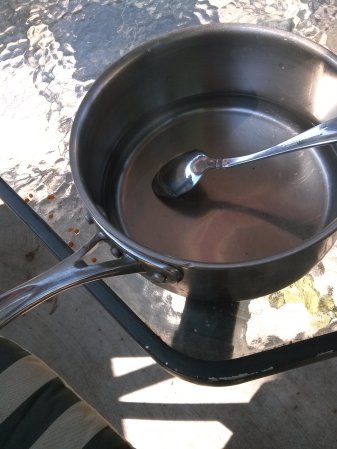
If you mixed the above ingredients in a pitcher the granulated crystals of sugar would just swirl around and fall to the bottom of the pitcher leaving the last person to pour a glass with ALL the sugar in one glass.

To make the simple syrup heat all of the sugar in a portion of the amount of water in the recipe. The sugar crystals melt into the water leaving the taste of sugar behind.

Now when everything goes into your serving pitcher there are no crystals of sugar but the sweet flavor is there to mix with the tart lemon juice.
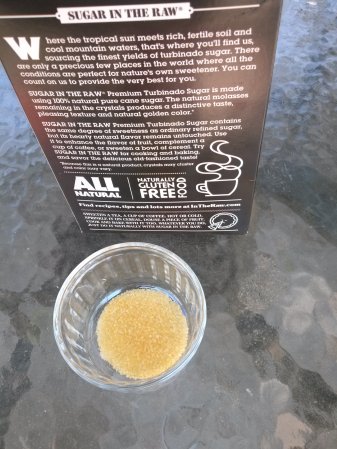
Chill for a few hours and serve in glasses of ice. If you are serving your lemonade at the table, slice some thin slices of lemons and let them float in the lemonade for a homemade touch.
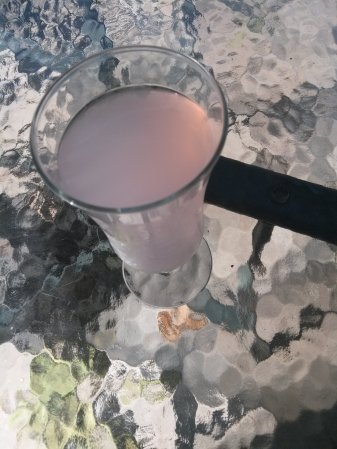
 

We tend to scale back on the amount of sugar. Play around with the amounts and suit to your taste.

See you tomorrow!


cherries and blueberry mini-tarts

The farmers’ market was packed with beautiful fruit lined up in neat rows on this sunny Sunday morning.

Yesterday we talked about doing mini-versions of pies and tarts. If you’re not a baker these mini-tarts can be a great way to get you making dessert without sending flour all around your kitchen.

These pre-baked shells are made with phyllo dough and give any dessert a flaky texture. The buttery layers of thin dough have been assembled and formed into a cup. They’re just waiting for you to add a filling.

These mini-tart cups can also be used for savory ingredients so you can make bite-sized appetizers that are perfect for holding, with a glass of wine, for a cocktail party appetizer.

Today we are using them to make a no-bake cherry and blueberry filling to make small dessert bites. They will be served after our dinner of thinly sliced steak, with a shallot jam, and grilled romaine and green bean salad for dinner tonight.

The berries get macerated with a little bit of sugar. We like to use what is raw sugar which is made with 100% natural pure cane sugar.

The tiny crystals have a natural molasses taste and have the same sweetness as refined sugar. It’s all natural, has a pure flavor and is considered a gluten-free food.

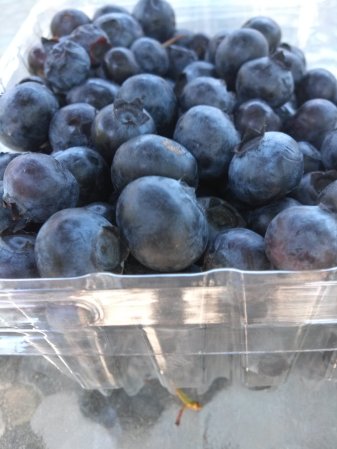
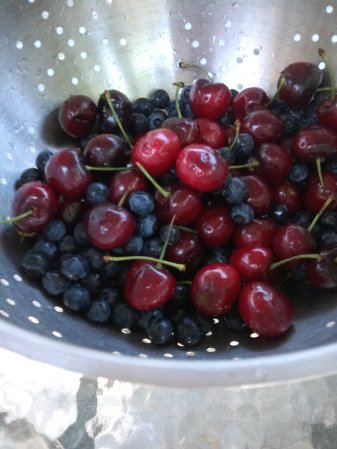
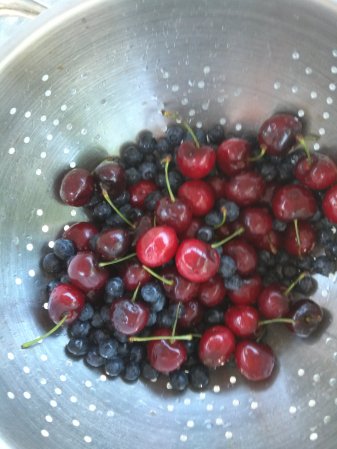
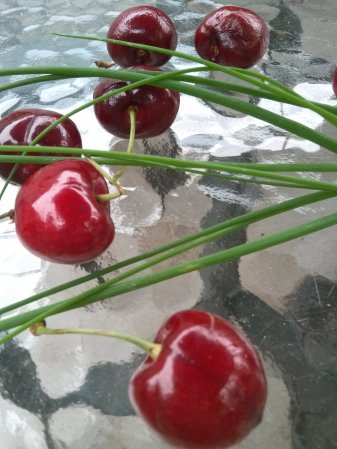
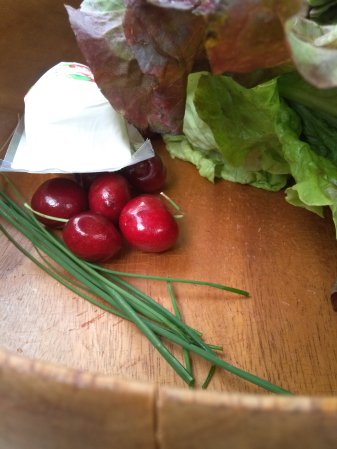
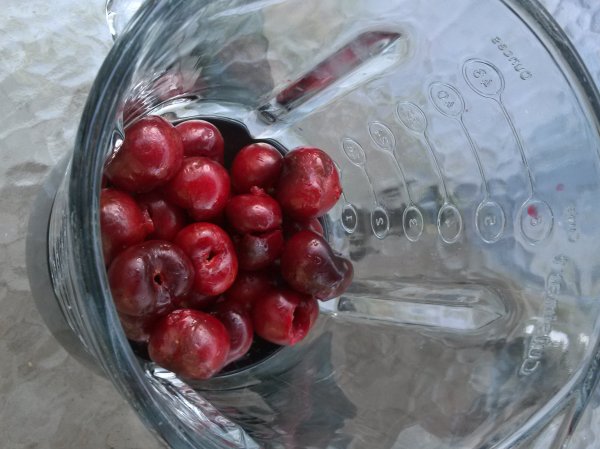
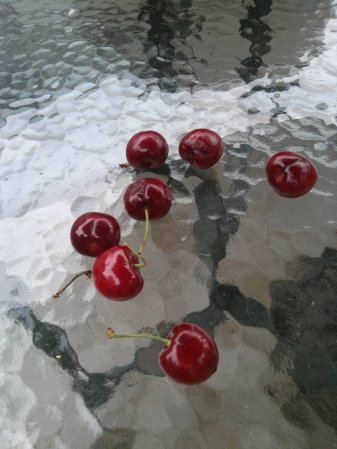
The cherries we had leftover from the cherry salsa and pork tenderloin from a few posts ago will be joined by the blueberries we picked up this morning.

Who says you can’t combine the fruits that you pick up at the market?

To give the phyllo cups an extra crispiness, place just the cups in the oven at 350F for 3-5 minutes. Allow to cool and then add the macerated fruit. If you want to top with some whip cream be sure and make it fresh.

These fruit tarts deserve it. Pick up some heavy whipping cream at the store. Before you are ready to whip the cream, place a metal bowl and your whisk in the freezer for 15 minutes.

The cream is more stable to whisk to stiff peaks when working with equipment that is cold.

This is an important step in the summer with a warm kitchen. You can sprinkle a little of the raw sugar on top for an added crunch.

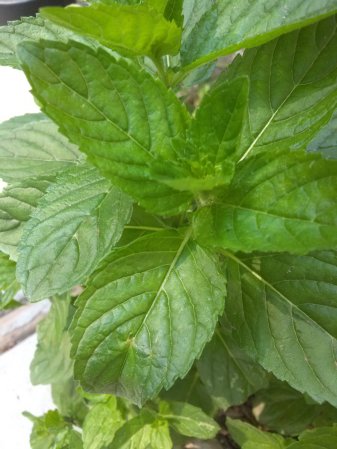
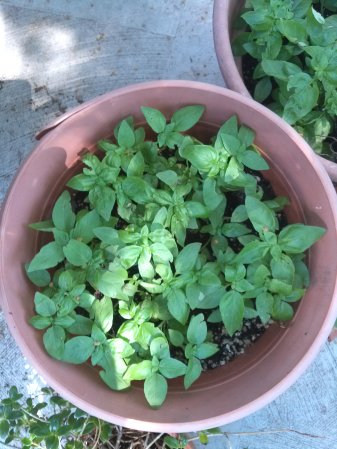
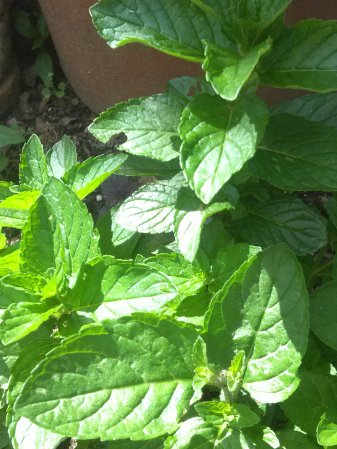
As always, take advantage of the mint growing in the garden too and tear a few leaves for your dessert.

See you tomorrow for week three of the blogathon! Happy Father’s Day!

keeping it real cherry pie filling

Getting cherries ready to use in a recipe requires using a piece of equipment that makes you wonder who was the first person to make it?

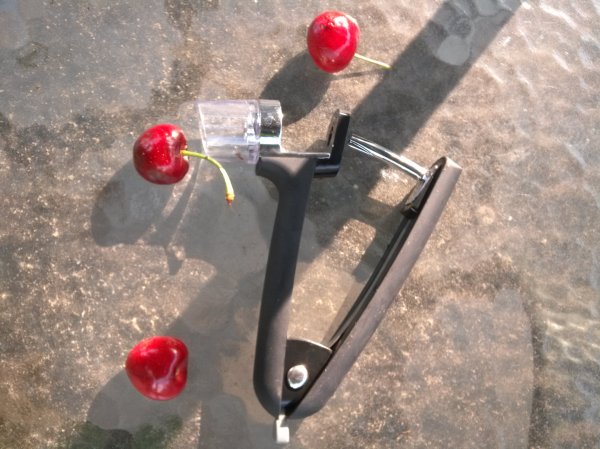
It’s a handy tool for sure. The cherry pitter. This device slides the pit right out of the middle of the cherry with ease.

You can use this kitchen gadget to remove the pits of cherries or the back of your kitchen knife. Place the cherry under your knife blade turned horizontal.

Apply pressure to slightly smash the cherry and extract the pit. A cherry pitter is so easy to use it’s worth getting one.

One important kitchen tip is you don’t want to prep your cherries on your wooden cutting board.

The cherry juice will run everywhere and end up staining your board. Try and work over a plate or paper towels so the juice of the cherries can be easily washed away.

This Wednesday, June 18, is National Cherry Tart Day. You don’t have to be an accomplished baker to make a cherry tart or pie.

There are many brands of ready-made pie crusts or already-baked-mini-shells to help you pull off a cherry dessert in your kitchen.

Take the help from the store where you can get it. That’s why these products are there waiting for you in the market.

You’re making a cherry pie filling with fresh ingredients. If anything needs to be as close as nature intended it’s the pie filling.

That cherry pie filling in a can on the store shelves is cloyingly sweet and there are so many added sugars they mask any cherry taste. And there certainly isn’t much “real” cherry taste.

Last June we talked about how we like to do mini-versions of pies and tarts. Sometimes these little mini-pies are all you need for a taste of summer after your meal.

Make a cherry pie filling with your mini -pies or pre-baked cups of cherries, with some orange juice or lemon juice, and some sugar. These mini -cherry pies, with a scoop of vanilla ice cream in a bowl, is cherry pie a la mode for a summer dessert.

Be sure and garnish with some mint before serving. Try this recipe from all recipes.com and make some cherry pies or tarts this week

http://allrecipes.com/recipe/cherry-pie-filling/

Tomorrow we continue the cherry conversation.

pork tenderloin part two: cherry salsa

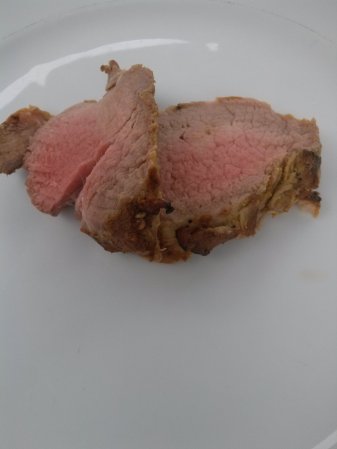
The cherries are ready to be made into a fruity salsa for the pork tenderloin. It’s a colorful topping for the grilled meat with a honey mustard crust.

This is the kind of dish you want to plan for leftovers and a great way to work more fruit into your diet.

Gorgeous garnet-colored fruit make a salsa that is bursting with flavor. Yesterday’s pork tenderloin paired with this cherry salsa is a dish that can be made ahead of time and served at room temperature.

It’s also a great dish to bring to a summer potluck as there isn’t anything like mayonnaise in the dish that could go bad on a warm summer afternoon or evening.

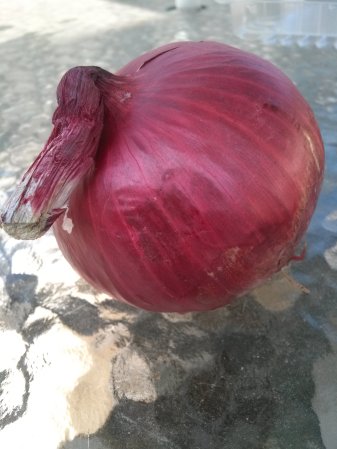
For the salsa you want to chop half a red onion and marinate in some red wine vine or balsamic vinegar. By letting the onions sit in the vinegar it mellows the sharpness that the raw onion can have.

Marinating the onions in the vinegar brings harmony to the flavors of the salsa. Or you can omit the onions. Pit enough cherries for a cup of cherries and give them a chop into bite-size pieces along with the onions.

Mix a 1 to 3 ratio of one tablespoon vinegar to 3 tablespoons extra-virgin-olive-oil.

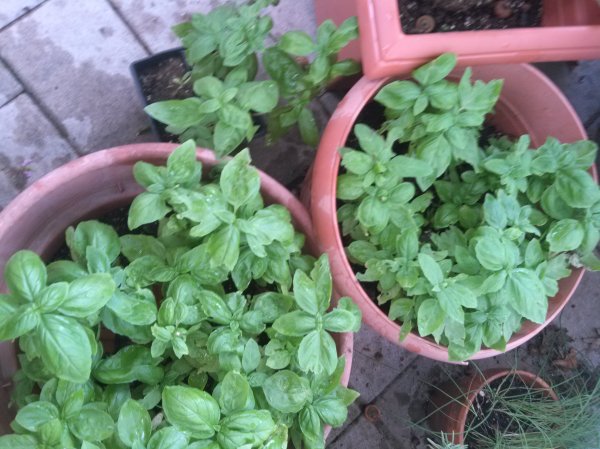
Stir in a teaspoon of Dijon mustard to tie in the honey and mustard flavors of the pork. You can add basil leaves, mint leaves, or a combination of both to round out the taste of the salsa.

The salsa can be used with a meat or as a dessert with the adjustment of flavors. To use the salsa as a dessert item, with ice cream or a baked good, skip the onions and vinegar.

You can toss the cherries with some orange juice and a splash of fresh lemon juice. Use some citrus zest to your liking and add some mint leaves.

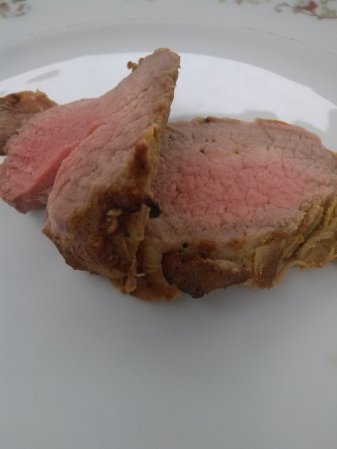
When slicing the pork, slant the angle of your knife and cut on a bias. You can serve the slices of pork tenderloin on a platter and spoon the salsa over the pork.

The smokiness from the grilled pork tenderloin is highlighted by the salsa with some mustard flavors mixed with the sweetness of the cherries, honey from the pork crust, and the perfume of the basil leaves.

Make note that this would make a great Father’s Day meal this Sunday to treat Dad to a delicious meal with his family.

More ideas for cherries coming up!


honey mustard pork tenderloin with cherry salsa

June is the month for cherries. Take advantage of the season and enjoy this fruit now.

Cherries can be a topping for ice cream or used as an ingredient in a salad with goat cheese and herbs. One of our favorite uses for cherries is as a  salsa for pork tenderloin. Explore every way you can enjoy them.

Today we talk about pork tenderloin as a dinner option. It’s a lean cut of meat and reasonably priced. We can get a tenderloin for under ten dollars and still have some leftovers.

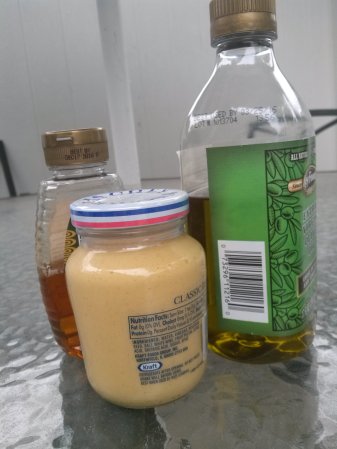
We are going to make a two-part marinade here. First, mix a few generous tablespoons of some Dijon mustard with olive oil and a sprinkle of kosher salt.

Rub this all over the meat. Any meat that is going on the hot grill should be left out of the refrigerator for half an hour to take the chill off the cut of meat.

But where’s the honey in the honey mustard pork tenderloin? You always want to make your own marinade. You control the ingredients and most marinades sitting on the market shelves are loaded with added sugars.

That’s why so many people end up with meat that is charred on the outside and still raw on the inside. The sugar will start to burn before any protein reaches a safe level of cooking on the inside.

Grill the pork about 5 minutes on both sides until done. Then, brush on a layer of honey all over the meat when warm and the flavors will absorb and work with the tangy Dijon mustard.

The honey mustard mixture gives the pork tenderloin a crispy, outer crust when it is cooked on the grill. The inside is cooked through at a medium doneness.

Always allow hot meat just off the grill to rest so the juices can redistribute inside. Otherwise, the first slice lets all the juices flow out.

Now that you are on the road to making a perfectly tender pork tenderloin you have a dinner item that pairs well with any summer fruit. Pork and fruit have a natural affinity for one another.

Stop back tomorrow for the cherry salsa recipe!


what’s in a reduction?

So, here’s the riff on yesterday’s recipe for macerated strawberries.

If you were sitting in an elegant restaurant reading the menu by candlelight and it said one of the dessert items was a plate of fresh strawberries with a balsamic reduction you would be intrigued.

Here’s the thing to keep in mind. Those restaurant menu listings are meant to sound like something you wouldn’t make for yourself at home. That’s part of the experience.

A balsamic reduction is actually vinegar that has been boiled down. What happens when you boil vinegar? The amount of vinegar in the pot reduces and thickens. And there’s your balsamic reduction.

The advantage of reducing the balsamic vinegar is that it concentrates the flavor. The tart flavor of balsamic vinegar is a contrast to the sweetness of the strawberries.

Macerated strawberries with a balsamic reduction can be paired with a good quality cheese, like a nutty Parmesan, or a soft cheese like an organic goat cheese.

It’s a departure from your usual dessert offerings.

Did you know that balsamic vinegar comes in a delicate and fruity white version?

It’s a little less assertive than the dark version of balsamic vinegar. The white balsamic vinegar combines the balsamic vinegar with the lighter flavor of white wine vinegar.

Both versions of balsamic vinegar can be boiled down to use as a reduction. The thicker texture of the reduction can be used to drizzle over fruit for a pucker of a finish for your fruit.

Macerate the berries with some sugar like the recipe linked out to Martha Stewart’s version in yesterday’s post and finish with a reduction of dark or white balsamic reduction.

The sweet and tart flavor combination is an easy-to-prepare dish for any night of the week. Head outside to your herbs and grab some mint leaves for scattering over the strawberries.

The fruits of the season deserve the brightest and freshest ingredients you can find. It’s what makes the fruit in season the star of the plate.

They don’t need a lot of dressing up to be a stand-out dessert.

We’re headed to the farmers’ market now. The conversation will have to shift to cherries now.

Stop by tomorrow to get ideas for what to do with all those beautiful cherries arriving at the markets!


making strawberries even juicier!

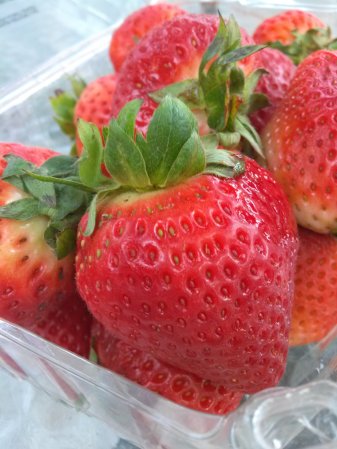
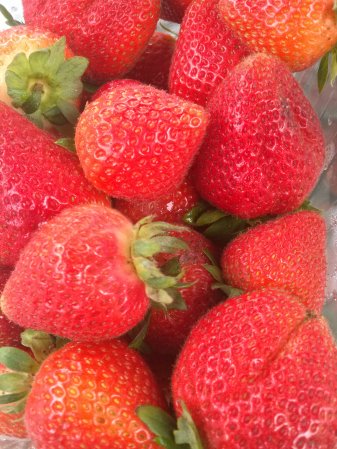
Strawberries, at their peak of ripeness, are naturally juicy. They are a perfect match for some thick whipped cream or buttery pound cake.

Macerated strawberries are another way to serve the ruby-red fruits from the farmers’ market. It sounds like it might be complicated to prepare macerated berries. It’s not.

As a matter of fact, it requires one simple step anyone can do.

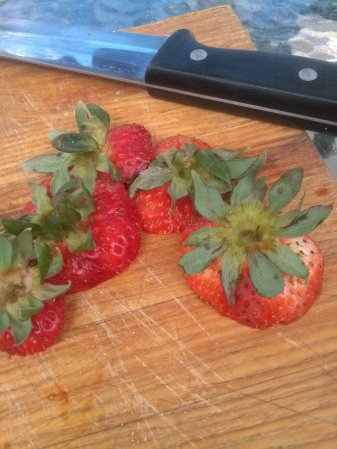
Follow the instructions from yesterday’s post to clean and store your strawberries. Slice off the tops. (Go back a few posts to read about what to do with those strawberry tops.)

Macerated berries are fruit that has absorbed the flavors of a liquid the berries have been marinated in for some time.

In this recipe from Martha Stewart the berries are macerated in their own juices. http://www.marthastewart.com/340218/macerated-strawberries

Granulated sugar gets mixed with strawberries in a bowl. The sugar breaks down the texture of the fruit and causes the natural juices to be drawn out.

The strawberries are then left to sort of reabsorb their own juices making a type of strawberry juice liquid to soften the berries.

If serving the macerated strawberries with pound cake pour some of the strawberry juice on top and let it soak into the cake.

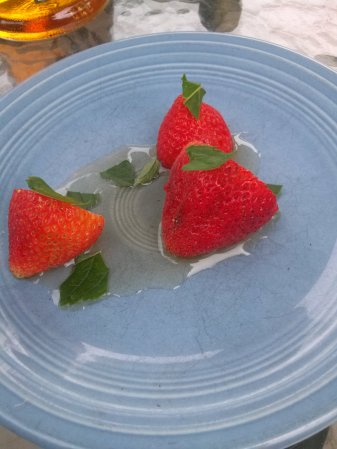
Serve the macerated strawberries and garnish with some fresh mint leaves. You can serve with a dollop of yogurt or a scoop of ice cream.

If you can spoon sugar on top of some berries and stir together you can make macerated strawberries. Simple and summer strawberry flavor ready in your kitchen in very little time.

See you tomorrow for a riff on this recipe.

how do you wash your berries and how long do they last?

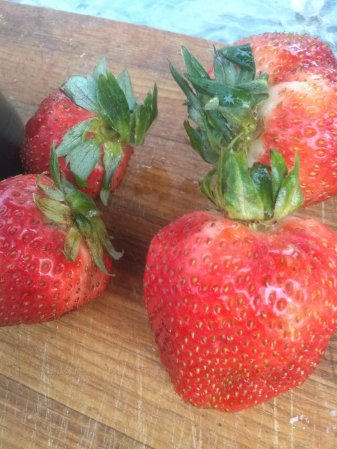
We all know it’s important to thoroughly wash the produce we purchase before serving it up on a plate. The most important step in preparing berries for a dish is rinsing them clean.

Rinsing berries in advance and then storing in the refrigerator can lead to mold very quickly.

How can you be sure you are getting your strawberries as clean as possible as well as extend the shelf life of the fruits that are bringing us into summer?

There’s one ingredient that is inexpensive, makes a difference in getting your fruit ready and you probably have it on hand right now. Reach under your kitchen sink, or wherever you keep your white vinegar, and bring out the powerhouse cleaner.

The folks over at Cook’s Illustrated are always full of  reliable kitchen-tested ideas and this one extended the amount of time fresh berries lasted in our refrigerator. Make a white vinegar bath in a bowl using a 3 to 1 ratio of  three cups of water to one cup white wine vinegar.

The acidity of the vinegar kills any bacteria or spores that are on the berries and the water helps rinse them clean. Place whole berries in the vinegar bath. Remove berries with a strainer and place on paper towels.

Line your salad spinner with paper towels and spin the berries until they are thoroughly dry. The paper towels are there to  make sure all of the liquid is pulled from the berries and absorbed someplace else.

This step removes most of any residue from the berries. It’s the residual water left on berries that creates an environment to increase moldiness at a rapid rate when they get stored in the refrigerator.

As a final step, get an air-tight container to store your berries in and line with additional paper towels. Place the berries in the container and leave a gap when covering to allow any moisture to escape and stay away from the berries.

When you find a colorful basket of berries you want them to last as long as you can to use in recipes for salads or desserts. Nothing is more disappointing than seeing a beautiful bounty of berries go moldy in the refrigerator.

Be sure and follow this method for all the berries that will be filling your market in the months ahead!

Tomorrow will include a recipe idea for berries that is easy to make and adds a twist to dessert. See you then!


organic strawberry fields now and forever

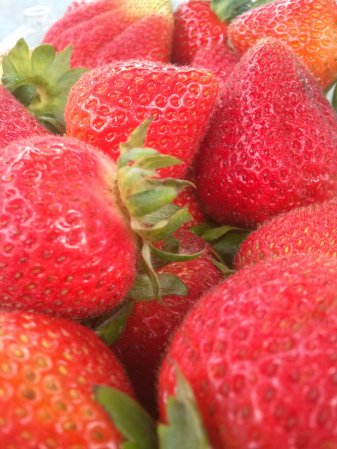
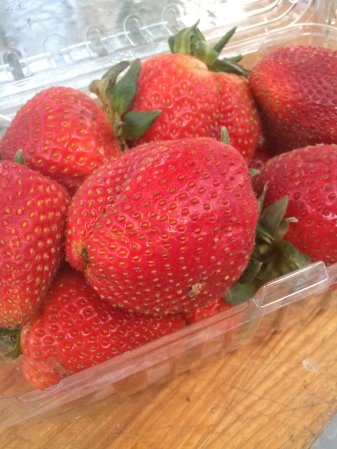
Strawberries are in season and we have discussed some different ways to use every last inch of them for refreshment in cool drinks for the warm weather season.

Follow the instructions in the previous posts and you’re armed with refreshing drink ideas for you as well as the kids this summer. Any recipe that can pull double-duty is one that you want to have in your kitchen recipe box.

Strawberries are grown close to the ground so they pose a challenge in keeping them free of bugs and diseases associated with the soil.

This is why the whole groundswell of pesticides used on strawberries began to take shape. Strawberries became known as a finicky crop to grow and presented unique circumstances when grown on a commercial-scale for production for public consumption.

The route of growing strawberries organically, or any other fruit or vegetable, is that the product is highly perishable. This is where the concept of farm-to-table was born in that you limit the distance between the produce grown and the time it takes to travel to your family dinner table.

The goal is to create the shortest distance possible with no chemical or pesticide used in the growing process.

Strawberries in particular pose a challenge in their low-to-the-ground growing style. Take a look at this article from Eating Well Magazine about a farmer and his experience with farming and growing strawberries.

http://www.eatingwell.com/food_news_origins/organic_natural/organic_farming_success_story_growing_organic_strawberries_in_california

Read about the early morning he was in the strawberry fields when a cloud of chemical pesticides rolled over him and the strawberries.

He became dizzy and short of breath and that moment changed the way he farmed from that day forward.

Take the time to know where the food you feed your family comes from and how it is grown and farmed before you purchase it.

Make an effort to join a CSA (Community Supported Agriculture) or get to know the farmers at your local farmers’ market. You can find out more about what a CSA does and how to join here.

http://www.localharvest.org/csa/

They can guide you in your choices and help you understand how to adjust your menus to a seasonal calendar.

This way your family is always eating what is at the peak of freshness.

The first week of the June 2014 blogathon is done. Tomorrow is Monday and the start of another week!

strawberry water meet agua fresca

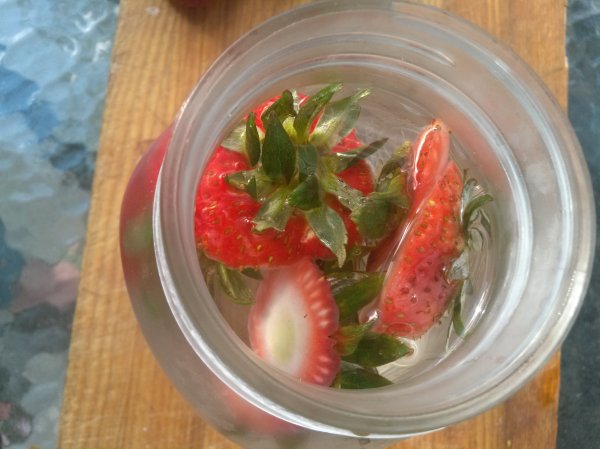
We talked about using the leftover strawberry tips to make strawberry water yesterday. It is a refreshing drink in a super-chilled glass on a hot day.

The idea is to infuse the water with the gentle strawberry flavor much like the cucumber water that is served in restaurants or at the spa.

The strawberry slices should steep in the water for at least six hours but an overnight chill in the refrigerator is ideal.

Take the strawberry infused water a step further by making agua fresca, a chilled fruity water drink that is popular in Mexico.

Translated to mean “fresh water” they are made with fruit, water, sugar and sold by street vendors. The drink is also available in restaurants where servers ladle it into drinking glasses from jars.

The trick to making agua frescas is that you want to use fruit that has been pureed but you don’t want to have the consistency of a fruit smoothie.

The pureed fruit is in the recipe to infuse the water with the sugar but it needs to be strained through a mesh to pull the fruit solids out of the finished drink.

In order to incorporate the sugar crystals you need to make a simple syrup. Melt some sugar in a bit of water until it is blended into the water. Allow the syrup to cool and come to room temperature.

Puree some strawberries in a blender and add to the strawberry water. Strain the mixture into a pitcher. Add your simple syrup.

The basic recipe for agua fresca calls for the fruit, sugar, and water to be mixed together. Play with the ingredients like swapping out watermelon for the strawberries. Add lemon or lime juice.

Add some mint leaves as a garnish or muddle them in a glass before you pour. Simply crush the mint leaves to release the essential oils. This will give your drink a stronger mint flavor.

The agua frescas can be served to kids in paper cups at a pool party and go in the opposite direction and be part of a cocktail when the sun starts to set.

Run a lemon wedge around the rim of a cocktail glass for moisture and press the rim into a bit of granulated sugar on a plate. Add some vodka to the agua fresca and toast summer!

See you tomorrow!